This vacacion's assignmet was to listen to really long radio show featuring, guess what? HAMLET OF COUSRE!!! The show is about a Hamlet version preformed by inmates of a Missouri prison!!! That´s hardore.
In this preformance, we can clearly see how the inmates relate themselves with the characters in the play. All of them, specially the one who impersoned Claudius, could canalize their feelings of guilt, rage and desire for revenge in their characters. This causes their interpretation of the play into a very deep preformance rich in subtextual interpretations that are enhanced by the increadibly preformances of the actors.
Something funny about the play:
Imagine th guy in oicture A, impersoning the guy on picture B.
The lesson here is that it does´nt matter if you are good, bad, black, Jack Black, Tiger Woods, a tiger in the woods, or a tiger in James Woods; you will always be able to make a great preformance on a play. Unless you are Homer Simpson, or maybe he could... ?
(From left to right: A,B)
Finally the proof of my last statement:
jueves, 1 de diciembre de 2011


Essays, Essays, Essays... Why Lord, Why!?! (Create Your Own Entrie Edition)
Here comes (The Sun!!!; yep, Mr. Tangen, Beatles reference) another of my classic essay analisis responses. This time, however, I´m going to try an experimental way of writing that is called "read only what you want"!!! This is how it works, Im going to give a list of choices for you to pick and you will only read the paragraphs with the number of that choice. Lets give it a try:
1. I want to read a serious Hamlet analysis.
2. I want to hear about the story of the shrimps of Anapoima
3. I want to Read about why the Beatles are the best rock band of the world´s history
4. Read?!? Im sick of reading for today!!! (Straight to the video)
1. Northrop Frye´s essay debates if a man can be judged only by his actions, or for what he intends to do in the precie moment of the judgment. As it is one of the keys aspects of the play, Frye describes the situation between Claudius and Hamlet. He states that Claudius has a great potential but he is stained by his crime, point I like. I think nobody can scape his past; man is the slave of his words and actions, so in a certain way, we ca be really good people but to kill any chances of success because of our past actions. True, true... there is the second chance policy that mayb rescue Caludius from his criminal figure, but he killed the king, he killed his own brother and then married his wife!!! Is this guy totally ignoring the golden rule (is not the Lonely Island one...) you dont ride on your friend´s horse. I think that a man is judged by his actions, and it should not get second chances when his crimes are great. (Note: Mr. Tangen, please don´t cnsider this as your class policy).
2. Once upon a time, a kid ate shrimp in Chicala (country club in Anapoima) and he suffered of food intoxication. Lesson, dont eat shrimp in hot places that are far away from the ocean.
3.The Beatles are the best rock band in the world´s history. There is no explanation needed for this statement.
4. Random video, actually not so random but totally anoying and hilarious.
1. I want to read a serious Hamlet analysis.
2. I want to hear about the story of the shrimps of Anapoima
3. I want to Read about why the Beatles are the best rock band of the world´s history
4. Read?!? Im sick of reading for today!!! (Straight to the video)
1. Northrop Frye´s essay debates if a man can be judged only by his actions, or for what he intends to do in the precie moment of the judgment. As it is one of the keys aspects of the play, Frye describes the situation between Claudius and Hamlet. He states that Claudius has a great potential but he is stained by his crime, point I like. I think nobody can scape his past; man is the slave of his words and actions, so in a certain way, we ca be really good people but to kill any chances of success because of our past actions. True, true... there is the second chance policy that mayb rescue Caludius from his criminal figure, but he killed the king, he killed his own brother and then married his wife!!! Is this guy totally ignoring the golden rule (is not the Lonely Island one...) you dont ride on your friend´s horse. I think that a man is judged by his actions, and it should not get second chances when his crimes are great. (Note: Mr. Tangen, please don´t cnsider this as your class policy).
2. Once upon a time, a kid ate shrimp in Chicala (country club in Anapoima) and he suffered of food intoxication. Lesson, dont eat shrimp in hot places that are far away from the ocean.
3.The Beatles are the best rock band in the world´s history. There is no explanation needed for this statement.
4. Random video, actually not so random but totally anoying and hilarious.
Analitic Response (...Or, The Homework I´m Supposed to Do Anyway)
Ok, here it goes... My first blog entry since the road, and I´m kind of nervous... Well, ,aybe just too lazy to admit I don´t really enjoy spending my off-school time analyzing Hamlet essays.
On August Wilhelm (Ha ha, like the funny scream from action movies!!!)
essay, he describes the character of Hamlet as a master of the art of deception, that masterfully achieves to make the people arround him that he is mad by impersonating the looney in a way that not even Natalie Portman could achieve.
On contrary, Hamlet is describe as a man that is a hipocrite to himself, as he over-thinks the stuff he wants to do, ruining his own success. Is said that Hamlet is one part of wisdom, but three parts a coward.
My thoughs on this matter are split, he is a master of acting and all of that; but who says Hamlet is a coward (please dont say August), he is brave enough to kill his mother and his uncle. He finishes the act of revenge, so he is braver than many people in my english class. (Pollo thats you; just kiddin´)
What else can I say, I really dont want to keep on writing, so here is the traditional video at the end of my entries:
On August Wilhelm (Ha ha, like the funny scream from action movies!!!)
essay, he describes the character of Hamlet as a master of the art of deception, that masterfully achieves to make the people arround him that he is mad by impersonating the looney in a way that not even Natalie Portman could achieve.
On contrary, Hamlet is describe as a man that is a hipocrite to himself, as he over-thinks the stuff he wants to do, ruining his own success. Is said that Hamlet is one part of wisdom, but three parts a coward.
My thoughs on this matter are split, he is a master of acting and all of that; but who says Hamlet is a coward (please dont say August), he is brave enough to kill his mother and his uncle. He finishes the act of revenge, so he is braver than many people in my english class. (Pollo thats you; just kiddin´)
What else can I say, I really dont want to keep on writing, so here is the traditional video at the end of my entries:
Funny, Homer Simpson v/s Shakespeare!!!
lunes, 24 de octubre de 2011
The Road... Is It a Circle After All?
Can a novel be a round turn? By any chance, can the whole novel be a circle that makes takesthe reader to a start? Yes it is!!! The Road is a novel that doesn't end, but rather finish with a new start. We can clearly see evidence of this in the final chapter of the novel:
"Once there were brook trout in the streams in the mountains. You could see them standing in the amber current where the white edges of their fins wimpled softly in the flow. They smelled of moss in your hand. Polished and muscular and torsional. On their backs were vermiculate patterns that were maps of the world in its becoming. Maps and mazes. Of a thing which could not be put back. Not be made right again. In the deep glens where they lived all things were older than man and they hummed of mystery."
as you can see, even if this an extract from the end of the novel, it clearly speaks of the past, "Once there were(...) You could see(...) They smelled..." This may refer to the world's recovery from its catastrophic state into something better, but the author utilises scenes from the past (I assume) in order to create a sense of hope that resembles the one that existed before the catastrophy striked.
On the other side, McCarthy uses imagery to give a sense of mystery upon the future, "On their backs were vermiculate patterns that were maps of the world in its becoming". The extract alludes again to the past when reffering to the "earth on its beggining" this reiteration reinforces the author's possition on the returning to the past; but more importantly, it links to the phrase "...could not be put back" wich implies that even if the world is going back to its origins it will never regain its original glory.
In conclusion, the ciclic structure of The Road is designed by McCarthy in order to reinforce his message that tells us that we shall take care of our world.
Now, a music video to ANNOY Mr. Tangen!!!
"Once there were brook trout in the streams in the mountains. You could see them standing in the amber current where the white edges of their fins wimpled softly in the flow. They smelled of moss in your hand. Polished and muscular and torsional. On their backs were vermiculate patterns that were maps of the world in its becoming. Maps and mazes. Of a thing which could not be put back. Not be made right again. In the deep glens where they lived all things were older than man and they hummed of mystery."
as you can see, even if this an extract from the end of the novel, it clearly speaks of the past, "Once there were(...) You could see(...) They smelled..." This may refer to the world's recovery from its catastrophic state into something better, but the author utilises scenes from the past (I assume) in order to create a sense of hope that resembles the one that existed before the catastrophy striked.
On the other side, McCarthy uses imagery to give a sense of mystery upon the future, "On their backs were vermiculate patterns that were maps of the world in its becoming". The extract alludes again to the past when reffering to the "earth on its beggining" this reiteration reinforces the author's possition on the returning to the past; but more importantly, it links to the phrase "...could not be put back" wich implies that even if the world is going back to its origins it will never regain its original glory.
In conclusion, the ciclic structure of The Road is designed by McCarthy in order to reinforce his message that tells us that we shall take care of our world.
Now, a music video to ANNOY Mr. Tangen!!!
jueves, 22 de septiembre de 2011
What If... I've Been There!!!
I disagree with Andrese's ideas, because if I would have been in that situation, I wouldn't take advantage of the people in the house. I'll rather try to foment the creation of a collective identity, a group. This is the most logic thing to do in such situations because it is way better to form a travel group in order to survive rather than just stealing everything and then to deal with everything by myself. They say humans are sociable in nature, so is the most logical and natural thing to do. Think of the benefits... You could carry more stuff and is more than obvious that a bunch of hands work better than just 2. In conclusion, I think that the main character wouldn't have done the same if he din't have the kid, but on the other hand he would have probably tried to organize this people in order to make his journey easier.
When I commented this matter to Andres, he said that thinking it again my solution sounded "more practical", but as they say, we can't be sure of what are we going to do on certain situations unless we are there.

(Yeah!!!... My secret identity is Bear Grills!!!)
When I commented this matter to Andres, he said that thinking it again my solution sounded "more practical", but as they say, we can't be sure of what are we going to do on certain situations unless we are there.
(Yeah!!!... My secret identity is Bear Grills!!!)
Register Exercise
1. Hi sir sorry for not attending your class last week but I was very sick. I arrived today from a trip I was for the puente. I wanted to let you know that all my blogs are completed until last week. Furthermore I will talk to you tomorrow for anything else i am missing. Please take a look at them so you can grade them.
thanks,
thanks,
This piece is informal, because it has daily used words, but isn't familiar because there are no words that seem to require an internal understanding of the relationship between the people addressed
2. And tonight, let us think back to the sense of unity that prevailed on 9/11. I know that it has, at times, frayed. Yet today’s achievement is a testament to the greatness of our country and the determination of the American people. The cause of securing our country is not complete, but tonight we are once again reminded that America can do whatever we set our mind to. That is the story of our history. Whether it’s the pursuit of prosperity for our people or the struggle for equality for all our citizens, our commitment to stand up for our values abroad, and our sacrifices to make the world a safer place.
This extract shows a rather formal or even ceremonial register, as it uses generic audience references such as "american people" that suggest a speech situation.
3. OMG! I love lit. Holy mole, I want to be a poet, yo. J
Are there any explanations needed? FAMILIAR.
4. In Brooklyn days, I wanted to be Carlos Ortiz, lightweight champion
of the world from Ponce, Puerto Rico. I gazed at the radiance
of the black and white television till it spoke to me in tongues,
a boy spellbound by the grainy spirits who stalked each other in the ring.
of the world from Ponce, Puerto Rico. I gazed at the radiance
of the black and white television till it spoke to me in tongues,
a boy spellbound by the grainy spirits who stalked each other in the ring.
This text shows a formal register that tends to turn more informal, this is because it describes personal experiences.
5. I pointed out that his force had overthrown the government that issued visas. But, in this kind of a stalemate, the guy with the gun wins. And that was Ayman.
Eventually, he came up with a solution. I would give him a ride to his hometown, Zawarah, and the visa requirement would disappear. I gritted my teeth and told him to jump in.
That incident points to a fear that many Americans have of the Libyan rebels. Are they just goons who will create their own tyranny or chaos?
Particularly after we embraced Hamid Karzai in Afghanistan, only to see him engulfed by corruption, it’s fair to ask whether the Libyan rebels will do any better. The uncertainties are real. But, after my recent visit to Libya, I’m guardedly optimistic.
This final extract is formal. This is shown by the conciseness of the ideas presentation (highlighted in blue) and the tendency to use a varied language.
Are This People Stupid??? No, Seriously, Are They Out of Their Mind?!?!?!
Reading through The Road, looking for some serious elements that I could discuss, I found the most ridiculously shocking act of stupidity that I've ever read in a book throughout my whole life!!! I think that the extract is the only explanation needed:
"The waterfall fell into the pool almost at its center. (...) He turned and swam out to the falls and let the water beat upon him." (p. 38)
Is this for real??? Who in a reasoning state of mind could EVER think of swimming in the freezing cold the author describes in the book??? I even got to think that this may be foreshadowing of some sickness caught by one of the characters, because swimming in a place where there is snow and where you don't got any spare clothes or even shelter to get dry is simply so stupid that I'll guess that the kid will get pneumonia or some other horrible disease.
Lets just think about the hypothetical case where the kid dies of a cold or flu and the man is left alone in the middle of the road with the corpse of his dead son and a feeling of guilt that would provably drive him mad. The last thing I will say is that "if the kid dies, I TOLD YOU SO..."
To conclude, here is a video that represents the one and only more stupid thing that the one in the book:
"The waterfall fell into the pool almost at its center. (...) He turned and swam out to the falls and let the water beat upon him." (p. 38)
Is this for real??? Who in a reasoning state of mind could EVER think of swimming in the freezing cold the author describes in the book??? I even got to think that this may be foreshadowing of some sickness caught by one of the characters, because swimming in a place where there is snow and where you don't got any spare clothes or even shelter to get dry is simply so stupid that I'll guess that the kid will get pneumonia or some other horrible disease.
Lets just think about the hypothetical case where the kid dies of a cold or flu and the man is left alone in the middle of the road with the corpse of his dead son and a feeling of guilt that would provably drive him mad. The last thing I will say is that "if the kid dies, I TOLD YOU SO..."
To conclude, here is a video that represents the one and only more stupid thing that the one in the book:
Mother Nature's Naughty Son's
After some in-class discussion that helped me to recover my sleep, (for those who didn't read my last blog, is all about that thing of the cause of The Roads Apocalypse) we finally got to the conclusion that the dooms-day scenario in the novel was caused by... guess who? Yeah us, the humanity. Everything seems to point that the human lifestyle and its 'giving a ..." about Earth is what killed us all. (Thank you everyday guy who does not recycle...)
Anyway, even if we don't know exactly what happened (I am still going for The
 Simpsons evil chemical http://www.youtube.com/watch?v=R-9eYvvfhf4) there is a paragraph that describes a dream that reinforces that idea of natural hazards. In the dream, the man sees the bride that appears in the novels first dream, but she is sick now and he is taking care of her. Furthermore, the line I want to highlight is "...did not take care of her and she died alone somewhere in the dark..." (p. 32)
This could be a metaphor of Mother Nature suffering from human misuse and finally decaying to death as a consequence of this human ignorance. The character also seems to dream with this because he feels guilty for what happened to the world. Could he be involved in an evil conspiracy that destroyed the know world?!? Nah... I don't think so, so lets stay with Mother Nature's theory, and to make you stay with the idea here is Mother Nature's Son by The Beatles...
Anyway, even if we don't know exactly what happened (I am still going for The
 Simpsons evil chemical http://www.youtube.com/watch?v=R-9eYvvfhf4) there is a paragraph that describes a dream that reinforces that idea of natural hazards. In the dream, the man sees the bride that appears in the novels first dream, but she is sick now and he is taking care of her. Furthermore, the line I want to highlight is "...did not take care of her and she died alone somewhere in the dark..." (p. 32)
This could be a metaphor of Mother Nature suffering from human misuse and finally decaying to death as a consequence of this human ignorance. The character also seems to dream with this because he feels guilty for what happened to the world. Could he be involved in an evil conspiracy that destroyed the know world?!? Nah... I don't think so, so lets stay with Mother Nature's theory, and to make you stay with the idea here is Mother Nature's Son by The Beatles...
(Haha, the frog missed!!! XD, now seriously, enjoy nature and take care of it for future generations.)
The Cause of all...
When we first start reading The Road, we notice that the world has been raided by some kind of apocalypse. The reason of this apocalypse remains unknown and this may be because the author expects us to interpret this as a cause of our own or something like that kind of profound stuff, but I still can't stop asking myself, what happened to the world of The Road?!? After reading further into the novel, I found something that may be the answer to my suffering.
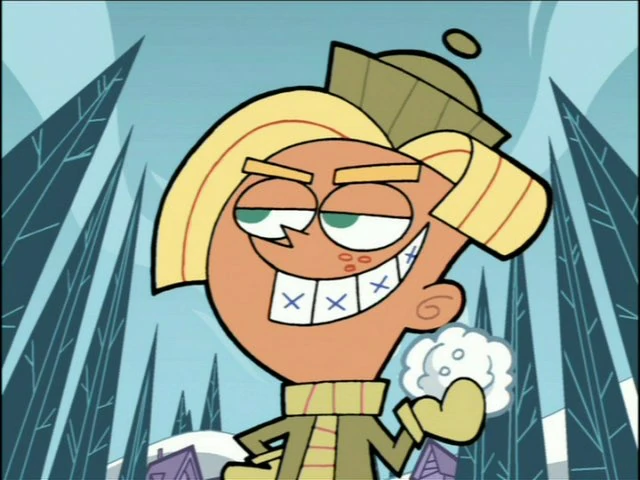


The enlightenment came to me as a snowball hitting the head of a child on a winter paradise.
And guess where I found the clue...
Eh... yep on the book.
(Jaja, Headshot!!!)
It was made clear to me when the kid ingenuously asks his father that if "...there could be fish..." (p. 22) in a lake they see from the top of a hill, but the real stuff is in his father's answer, "there's nothing in the lake." Is not one of my clearest explanations, but the as I said, this appeared in my head. Could it be something like a pollutant that got into the water and as it followed waters cycle it got into all over the world? Makes sense to me... this could explain the gray snow and water. But simply can't explain why society collapsed, I honestly hope that the answer is deeper in the novel, because I'm almost banging my head against the wall trying to figure it out.

(OMG!!! Is the evil pollutant!!!)
domingo, 18 de septiembre de 2011
Through Words We See... But Are They Always Right?
After reading Alejandra's Blogg, I have got a to a conclusion. The Road is a fairly depressing book!!! Tell me if I'm wrong, but the situation in which both main characters are is bad enough to make a family guy to kill himself...


But, is everything as bad? from A's point of view, the novel is a constant struggle to decide whether to survive or to kill yourself. But there is an important point to consider, as the main character is a father, is he actually going to be selfish enough to kill himself with the spare bullet leaving his son defenseless against the countless dangers of the endless wasteland he is currently living? or he might be responsible enough to survive until his son is safe? The second possibility seems to suit the novels ideals better. It is reasonable to think that he loves his son, even more, he finds his happiness in him. In conclusion, I disagree with A's position because I think it is more plausible that the main character would survive for his son before dying himself.
So, we can see through the words or we can see through (past) the words?
Considering that we all make different interpretation on words...
I think that of sight...
if we do 0 kind
we different
all a
have
Is all Truth, Beauty and justice?
In response to Maria Cecilia's blogg, I can state that I completely agree with the conclusions she had drawn. She just nailed it, the daydreaming that the main character shows throughout the novel is incredibly intense and melancholic. The author seems to be making an analogy that describes the wide spectrum of frustrated dreams that modern society is constantly increasing, as it raids with peoples hopes. Even if it is a profoundly depressing metaphor, he also emphasizes on the human capability of creating happiness for itself; this is shown (exactly as described on Truth, Beauty and Justice) on this man's daydreaming extacy and the conversations with his child. The other important theme represented by this author is the main character's solidarity, he gets happiness and hope from his child's well being. In overall, I'd enjoyed MC's blogg and hope to see more of these ideas in the future,
miércoles, 7 de septiembre de 2011
Close Reading on Coming Through Slaughter
After reading the novel Coming through Slaughter, I decided to perform a close reading of two sections of the storyline. One will be presented on this entry, and the other on this entry’s second edition. The following extract is placed in the storyline when Nora receives a visitor.
“Hello Webb, come in.
Thanks. Buddy must be out.
She half laughed. Buddy! And then looked quizzical at him.
Then shook her head.
Yeah, you better come in Webb.” (19)
Analysis:
When Webb says “Buddy must be out” he implies that he is not welcomed by Buddy, maybe he is jealous of Webb, afraid that he may steal his lady (19). Nora’s actions suggest that she knows that Buddy will get angry if she sees Webb, so she assures that Bolden isn’t home. Her laughing also suggest that she is a trouble maker and she knows it.
Bis.
The second extract is from the end of the novel in the exact moment when Bolden dies.
“Bolden’s hand going up
in agony.
His brain driving it up into the
path of the circling fan.” (136)
Analysis:
Bolden’s raising hand represents not only his physical agony, but also his internal suffering when committing suicide. Suicide is implied in the phrase “His brain driving it up...” (136). This phrase also suggests that he is mad and can’t control his actions, to the point of self destruction.
lunes, 5 de septiembre de 2011
HOW DOES THE STYLE OF THE ROAD CONTRIBUTES TO THE BOOK'S EFFECTIVENESS?

In literature, readers are attracted to certain characteristics that the book presents. In The Road, by Cormac McCarthy, a series of elements make the novel to effectively attract the audience. I will continue to analyze these elements.
In first place, one of the elements that the book provides is the fast pace created by it's small sentences.
"An old chronicle. To seek the upright. No fall but preceded by a declination." (15)
In this extract we can clearly see that the sentences are short and not paused. We can also see a remarkable lack of commas. This simple type of sentence construction makes the reader to go through the book rapidly making the monotone beginning faster and intensifying the action.
Another resource that the author employs in order to make the book more interesting for the audience is the vivid description of the landscape.
"The cold and the silence. The ashes of the late world carried on the bleak and temporal winds to and fro in the void."
Here we can see a deep and graphic description achieved by the use of powerful and concise word choice. This creates a sense of familiarity from the reader, made itself by the easiness of the imagination of the objects. Remember how easily the images of the book came alive in your head? I do.
This was my structural analysis of the first pages of The Road, I hope you've enjoyed.
Now, please comment below. Have you read through the first pages rapidly and enjoying?
jueves, 1 de septiembre de 2011
How the opening scene of The Road is alike the movie the book of Eli?
As you could have figured out, The Road is a post apocalyptic novel where the main character is not presented in the begging. ( is only presented as a he or the man )
Watch the following:
http://www.youtube.com/watch?v=OYrrofV76EY
Do you see any similarities, any differences (except for the kid, please, and try to focus on the environment.) the description of the landscape is really similar to the one on the video, and in the movie they also travel to the coast.
These are the quotes that, I think, resemble the clip:
"Nights beyond darkness and the days more gray each one what had gone before." (p.3)
Look at the clip's sky man, it looks like an apathetic's room!!!
"Barren, sightless, godless." (p.4)
The dead man with the gun fits to "godless" and the place looks pretty deserted.
"The soft ash blowing in loose swirls over the Blacktop" (p.4)
Ash snowing, dah (clearly seen on the clip.)
Watch the following:
http://www.youtube.com/watch?v=OYrrofV76EY
Do you see any similarities, any differences (except for the kid, please, and try to focus on the environment.) the description of the landscape is really similar to the one on the video, and in the movie they also travel to the coast.
These are the quotes that, I think, resemble the clip:
"Nights beyond darkness and the days more gray each one what had gone before." (p.3)
Look at the clip's sky man, it looks like an apathetic's room!!!
"Barren, sightless, godless." (p.4)
The dead man with the gun fits to "godless" and the place looks pretty deserted.
"The soft ash blowing in loose swirls over the Blacktop" (p.4)
Ash snowing, dah (clearly seen on the clip.)
lunes, 29 de agosto de 2011
Literature May Be Funny (comic weekly update)
NICK MEETS GATSBY: (GREAT GATSBY CHAPTER 1)
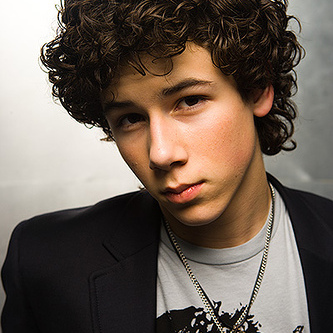
Hi, my name is nick. Nice to meet you...
 Oh, hello ehhh...Gatsby. Would you like to come to my party and then to ride in my boat; even if I just met you, I want to show a good appearance.
Uhh... okay, can I also make you to me take for lunch,
let me drink from your wine and champagne and make lots
of fun thing on your expense?


Okay, but first, have this roofie...


Lesson: if a rich man who you don't know offers you free stuff... accept it bu DO NOT take any drinks, food, injections or pills he gives you.
Hi, my name is nick. Nice to meet you...
Oh, hello ehhh...Gatsby. Would you like to come to my party and then to ride in my boat; even if I just met you, I want to show a good appearance.Uhh... okay, can I also make you to me take for lunch,
let me drink from your wine and champagne and make lots
of fun thing on your expense?
!
Of course I have so much money,
that I can use it as toilet paper!!
So it's decided lets go and burn some money, have a food fight with caviar and party with strangers that don't even like us!!!
Okay, but first, have this roofie...

What?!?
Lesson: if a rich man who you don't know offers you free stuff... accept it bu DO NOT take any drinks, food, injections or pills he gives you.
Final Paragraph Close Reading
When our English teacher that we were supposed to make a close reading on one paragraph of the Great Gatsby, I though that it would be a piece of cake. I WAS WRONG!!! The paragraph was so deep and at the same time, simple, that was stunted by the complexity of my task.

The paragraph I decided to analyse was the final paragraph of the novel. During Gatsby's funeral when Nick's final thoughts are printed into paper, ending the story with a powerful message (note, the guy smiling is Tom in disguise). The quote goes as following:
"So we beat on, boats against the current, borne back ceaselessly into the past."
Analysis:
This extract says more than it seems to, believe me I tried to simplify, but it is rich in imagery and symbolism. It basically says the following, it says that no matter how much we fight against the current (in this context could be either death or society) we will always get to our ends which will be to be forgotten on lost in history ("the past"). This line also a valuable resource in order to convey a strong message in the end of the novel; we will not live forever, so we must enjoy life while we can, while taking care of our spiritual life and moral values in order to die being remembered as good men and in that way last throughout history. NOT REACHING AND END, BUT AN EVERLASTING MEMORY.
Kind of depressing huh? Anyway, that's my analysis.
* In order to get out from the depression I've induced you watch the following vid...
Bye. XD
The paragraph I decided to analyse was the final paragraph of the novel. During Gatsby's funeral when Nick's final thoughts are printed into paper, ending the story with a powerful message (note, the guy smiling is Tom in disguise). The quote goes as following:
"So we beat on, boats against the current, borne back ceaselessly into the past."
Analysis:
This extract says more than it seems to, believe me I tried to simplify, but it is rich in imagery and symbolism. It basically says the following, it says that no matter how much we fight against the current (in this context could be either death or society) we will always get to our ends which will be to be forgotten on lost in history ("the past"). This line also a valuable resource in order to convey a strong message in the end of the novel; we will not live forever, so we must enjoy life while we can, while taking care of our spiritual life and moral values in order to die being remembered as good men and in that way last throughout history. NOT REACHING AND END, BUT AN EVERLASTING MEMORY.
Kind of depressing huh? Anyway, that's my analysis.
* In order to get out from the depression I've induced you watch the following vid...
Bye. XD
jueves, 25 de agosto de 2011
Close Reading on the GG!!!
Today's lesson was all about correcting sentences and close reading (analyzing in deep) of certain extracts of the Great Gatsby, by the immortal writer F. Scott Fitzgerald. Anyway, as you already had figured out, correcting is way less fun than a good analysis; so I'm writing my close reading instead of the corrections.
The extract I have chosen to analyse, is located in the novel just some time after Daisy's driving skills have been tested in a game I like to call "Dodge the Pedestrians" and has miserably failed on level 2 were she was supposed to let Myrtle live and run over her by accident like a lame Grand Theft Auto player. (For those who don't know, Myrtle is Daisy's husband's lover; a kind of "suspicious" accident ins't it.) Here is a dramatization on the events...
Note: if you look close enough you can see Daisy's "oops face"
Well then, the cite is the following:
"She was the first "nice" girl he had ever known. In various unrevealed capacities he had come in contact with such people, but always with indiscernible barbed wire between."
Analysis: The writer uses the readers prior knowledge in order to make a connection between G's (Gatsby's) past and the actual situation. In this particular occasion he nick says "the first 'nice' girl he had ever known" referring to G and Daisy's encounter when G was on the army. this extract also suggests that Daisy was G's first link to refined society and also indicates that he only feels comfortable with her as the narrator says that "... he had come in contact with such people, but always with an indiscernible barbed wire between them. Finally, as Gatsby considers Daisy as "the first nice girl..." it may imply that he would take the blame for her as he is clearly in love with her.
Hope I haven't make you sleepy, but contrarily I expect you have enjoyed my analysis.
Suscribirse a:
Entradas (Atom)